chicken brunswick stew recipe


The Best chicken brunswick stew recipe
I’m so excited to share with you my favorite chicken Brunswick stew recipe. This hearty, comforting dish has been a staple in our household for years, and I just can’t get enough of it. The rich flavors of the chicken, vegetables, and spices all come together to create a truly satisfying meal that’s perfect for any occasion.
Whether we’re gathering around the dinner table on a chilly fall evening or enjoying a quick weeknight dinner, this stew always hits the spot. The history of Brunswick stew is fascinating – it originated in the early 19th century in the state of Virginia, where it was created as a way to use up leftover meat and vegetables. Over time, it spread throughout the South and became a beloved regional specialty.
Today, you can find countless variations on the recipe, but at its core, this stew is all about using fresh, wholesome ingredients to create a nourishing and delicious meal. One of the things I love most about this recipe is how easy it is to customize to suit your tastes. Want to add some heat with some diced jalapeños?
Go for it! Prefer a milder flavor? Simply omit them.
The beauty of Brunswick stew lies in its adaptability – you can adjust the seasonings to suit your family’s preferences, making it a true crowd-pleaser. But what really sets this recipe apart is its comforting warmth. There’s something special about gathering around the table with loved ones and enjoying a piping-hot bowl of stew together.
It’s more than just a meal – it’s an experience that brings us closer together.
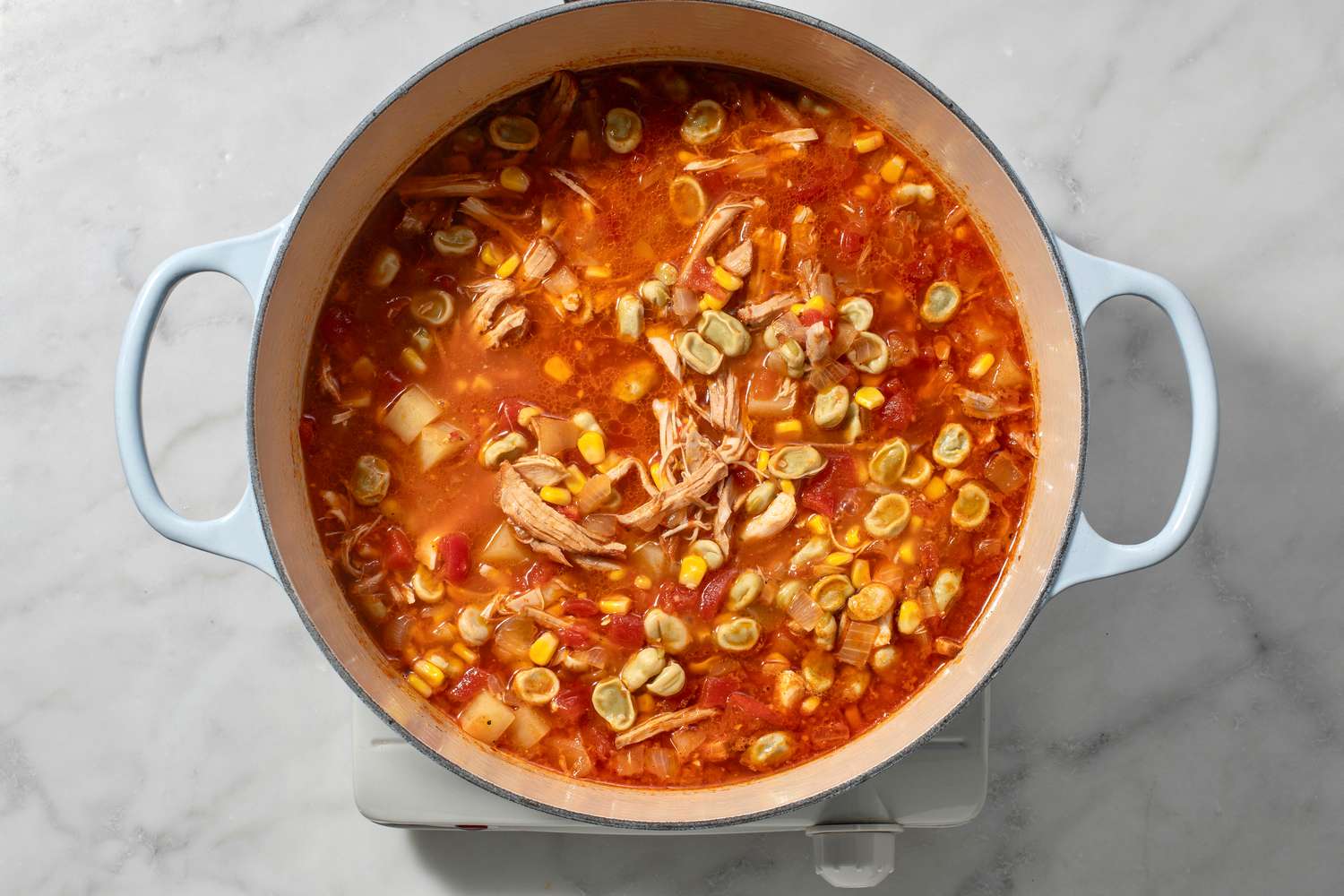
Chicken Brunswick Stew
A hearty Southern stew made with shredded chicken, smoky barbecue flavors, and a medley of vegetables. This comforting one-pot meal is perfect for cool evenings and feeds a crowd with ease.
🥘Ingredients
For the Stew
👨🍳Directions
🔧Equipment
📊Nutrition Facts (per serving)
📝Notes
Watch Video Of How Chicken Brunswick Stew Works
Leftover chicken Brunswick stew stores really well in the fridge for up to four days, and it freezes beautifully for up to three months. To reheat, just warm it on the stovetop over medium low heat, stirring occasionally, and add a little chicken broth if it seems too thick.
I like to serve it with crusty bread or cornbread on the side to soak up every bit of the broth. This recipe is always a good idea for family gatherings because it makes a big batch and pleases almost everyone.
You can set out hot sauce, extra barbecue sauce, or chopped green onions so people can customize their bowl. It is a comforting, no fuss meal that brings people together, and that is why I keep coming back to it.
❓ Frequently Asked Questions About Chicken Brunswick Stew
Q: What type of chicken is best for Brunswick stew?
In our household, we prefer using boneless, skinless chicken breasts or thighs for this recipe. You can also use chicken tenderloins or even leftover roast chicken – whatever you have on hand will work beautifully.
Q: Can I make this recipe in a slow cooker?
Yes! One of my favorite things about this recipe is how easily it adapts to different cooking methods. Simply brown the chicken and vegetables in a skillet before transferring everything to your slow cooker. Let it cook on low for 6-8 hours or high for 3-4 hours – either way, you’ll end up with tender, flavorful results.
Q: How do I store leftovers?
For short-term storage (up to 3 days), let the stew cool completely before refrigerating or freezing individual portions in airtight containers. When reheating, make sure to bring the stew to a simmer until hot throughout – this will help prevent foodborne illness.
Q: Can I use different types of potatoes?
Absolutely! While we love using small new potatoes in our recipe, feel free to experiment with other varieties like Yukon golds or red bliss – they’ll all add their own unique twist to this hearty dish.
Q: Is this recipe suitable for vegetarians?
No – unfortunately, traditional Brunswick stew recipes rely heavily on meat broth and sometimes even contain small amounts of animal fat. However, if you’re looking for vegetarian alternatives, consider substituting with vegetable broth and skipping any added animal products like bacon or sausage.