fufu and egusi recipe


The Best fufu and egusi recipe
Fufu and egusi is a traditional West African dish that has been a staple in my household for years. It’s a dish that’s steeped in history and culture, and its rich flavors and textures are a testament to the ingenuity of African cuisine.
The dish is typically made from cassava flour or yams, which are pounded into a dough-like consistency, and then boiled or steamed until they’re tender. The egusi, which is a type of melon seeds, adds a delightful crunch and flavor to the dish.
I love serving fufu and egusi at family gatherings because it’s a dish that everyone can enjoy together. My kids adore helping me prepare the fufu, pounding the cassava flour with a mortar and pestle until it’s smooth and creamy.
It’s a great way to get them involved in cooking and teach them about our cultural heritage. Fufu and egusi is also incredibly versatile – I like to serve it with a variety of stews or soups, or even with some grilled meats or vegetables.
It’s a dish that’s perfect for any occasion, whether you’re looking for a hearty meal or just want to try something new and exciting.
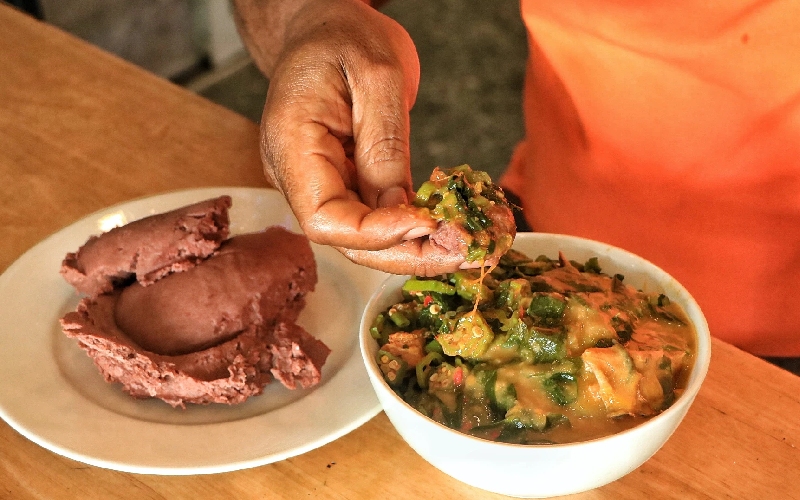
Fufu and Egusi Stew
Fufu and Egusi is a popular West African dish featuring a smooth, starchy fufu and a rich, nutty egusi stew. The egusi stew is made from ground melon seeds and a variety of vegetables and meats.
🥘Ingredients
For the Fufu
For the Egusi Stew
👨🍳Directions
Set aside.
🔧Equipment
📊Nutrition Facts (per serving)
📝Notes
Watch Video Of How Fufu and Egusi Stew Works
Fufu and egusi is a recipe that’s perfect for any occasion – whether you’re hosting a family gathering or just want to try something new and exciting.
The best part about this recipe is that it’s incredibly easy to make ahead of time, so you can prepare it in advance and reheat it when you’re ready to serve.
I like to store leftover fufu in an airtight container in the refrigerator for up to 3 days, so I can easily reheat it whenever I need it.
❓ Frequently Asked Questions About Fufu and Egusi Stew
Q: What is fufu made from?
Fufu is typically made from cassava flour or yams, which are pounded into a dough-like consistency.
Q: Can I use other types of flour to make fufu?
While cassava flour is traditional, you can also use other types of flour such as yam or plantain to make fufu.
Q: What is egusi?
Egusi is a type of melon seeds that are commonly used in West African cuisine.
Q: Can I substitute egusi with other seeds or nuts?
You can use other seeds or nuts such as peanuts or pumpkin seeds as a substitute for egusi, but keep in mind that the flavor and texture may be different.
Q: How do I store leftover fufu?
Leftover fufu can be stored in an airtight container in the refrigerator for up to 3 days.