egg foo yung recipe

egg foo yung recipe

The Best egg foo yung recipe

I’m so excited to share with you one of my family’s favorite recipes, egg foo yung. This classic Chinese dish has been a staple in our household for years, and it’s easy to see why – it’s a perfect combination of flavors, textures, and nutrients that will leave you and your loved ones satisfied and full. The history of egg foo yung is a fascinating one; it originated in the southern province of Guangdong, where it was known as ‘dΓ nchāo’.

Over time, it spread throughout China and eventually made its way to the United States, where it became a beloved dish in many Chinese-American restaurants. But don’t worry if you’re not familiar with this recipe – I’ll walk you through every step of the way, from preparation to serving. One of the things I love about egg foo yung is the technique involved in cooking it.

It’s all about creating a delicate balance between the soft eggs, crispy vegetables, and savory sauce. You’ll need to whisk the eggs gently but thoroughly before adding them to the pan, where they’ll cook into a fluffy, almost soufflΓ©-like consistency. And let me tell you – there’s nothing quite like the aroma of sizzling eggs and onions filling your kitchen.

It’s truly irresistible! As for me, I’ve been making egg foo yung for my family since my kids were little; they adore helping me prepare the ingredients and watch as I expertly flip the eggs in the pan. We often serve it with steamed rice or noodles, but feel free to get creative with your own favorite sides.

In terms of health benefits, egg foo yung is an excellent source of protein, vitamins D and B12, and minerals like iron and zinc – all thanks to those wonderful eggs! And let’s not forget about the antioxidants found in vegetables like carrots and green onions – they’ll help keep your skin looking healthy and radiant too.
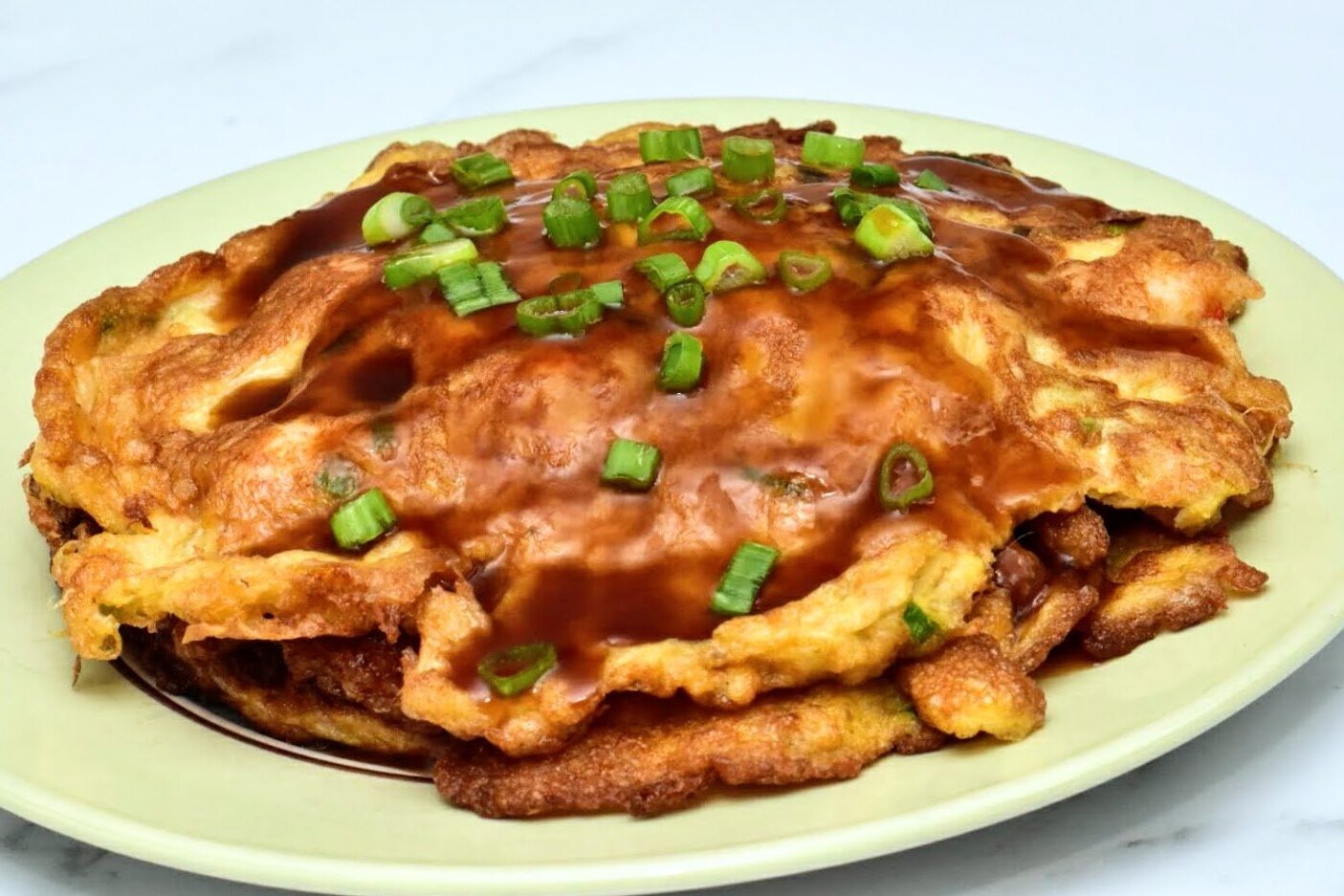
Egg Foo Yung

Egg Foo Yung

4.8 from 806 votes

Egg Foo Yung is a Chinese-style omelet made with fluffy eggs, vegetables, and often meat or shrimp. It is served with a savory brown gravy that complements the light, crispy texture of the egg patties.

Prep Time15 mins
Cook Time20 mins
Resting Time0 mins
Total Time35 mins
Servings: 4Cuisine: InternationalCalories: 280 kcal

πŸ₯˜Ingredients

For the Egg Foo Yung

6 large eggs
1 cup bean sprouts
1/2 cup sliced mushrooms
1/4 cup chopped green onions
1/4 cup diced cooked chicken or shrimp (optional)
1/2 teaspoon salt
1/4 teaspoon white pepper
2 tablespoons vegetable oil

For the Gravy

1 cup chicken broth
1 tablespoon soy sauce
1 tablespoon oyster sauce
1 teaspoon sugar
1 tablespoon cornstarch
2 tablespoons water

πŸ‘¨β€πŸ³Directions

1In a mixing bowl, whisk the eggs until frothy.
2Add bean sprouts, mushrooms, green onions, and optional chicken or shrimp.
3Season with salt and white pepper, then stir until combined.
4Heat 1 tablespoon of vegetable oil in a large skillet over medium-high heat until shimmering.
5Pour half of the egg mixture into the pan, spreading it into an even layer.
6Cook for 2 to 3 minutes until the bottom is golden brown and set.
7Flip the omelet carefully with a spatula and cook the other side for 1 to 2 minutes until golden and cooked through.
8Transfer to a plate and repeat with remaining oil and egg mixture to make a second patty.
9In a small saucepan, combine chicken broth, soy sauce, oyster sauce, and sugar.
10Bring to a simmer over medium heat.
11In a small bowl, mix cornstarch with water to form a slurry, then stir into the simmering sauce.
12Cook for 1 to 2 minutes until thickened and glossy.
13Pour the gravy over the egg foo yung patties and serve immediately.
14Garnish with extra green onions if desired.

πŸ”§Equipment

Mixing bowl
Whisk
Large skillet or wok
Small saucepan
Spatula

πŸ“ŠNutrition Facts (per serving)

πŸ”₯Calories: 280 kcal🧈Total Fat: 18gπŸ’›Saturated Fat: 4g❀️Cholesterol: 370mgπŸ§‚Sodium: 820mg🌾Total Carbs: 8gπŸ₯¦Dietary Fiber: 1g🍬Sugars: 3gπŸ₯©Protein: 20g

πŸ“Notes

For a vegetarian version, omit the meat and use vegetable broth. You can also add other vegetables like shredded carrots or bell peppers for extra color and nutrition.

Watch Video Of How Egg Foo Yung Works

Egg foo yung is a wonderful recipe to have in your rotation. It comes together quickly using basic ingredients you likely already have. The leftovers are great for lunch the next day.

I like to store the patties and gravy separately in the fridge. To reheat, I warm the patties in a dry skillet over medium heat until hot and crisp, and I reheat the gravy in a small pot. You can also serve the patties over steamed rice or with a side of stir fried vegetables for a complete meal.

For family gatherings, I make a big batch and let everyone top their own with gravy and extra soy sauce. It always gets eaten up fast and people ask for the recipe. This dish is simple, satisfying, and always a good idea.

❓ Frequently Asked Questions About Egg Foo Yung

1. Can I make egg foo yung without bean sprouts?

Yes, you can substitute bean sprouts with shredded cabbage or finely chopped celery. The texture will be slightly different but still good. You can also leave them out entirely and add extra bell peppers or onions.

2. How do I keep the patties from falling apart?

Make sure your egg mixture is not too watery. Drain any excess liquid from the vegetables before adding them to the eggs. Also, cook the patties over medium heat and let them set fully before flipping. Using a nonstick pan helps a lot.

3. What is the best way to make the gravy?

The gravy is simple. Mix chicken broth, soy sauce, and a pinch of sugar in a small saucepan. Bring to a simmer, then stir in a slurry of cornstarch and water. Cook until thickened, about one minute. You can also add a dash of sesame oil for extra flavor.

4. Can I bake egg foo yung instead of frying?

Yes, you can bake the patties in a greased muffin tin at 375 degrees F for about 15 to 18 minutes. They will be more like egg muffins but still tasty. The texture will be less crispy than pan frying.

5. How long does egg foo yung last in the fridge?

Cooked egg foo yung can be stored in an airtight container in the refrigerator for up to three days. Reheat in a skillet over medium heat or in the microwave. The gravy should be stored separately and reheated on the stovetop.

Similar Posts