pain de campagne recipe

The Best pain de campagne recipe

Pain de Campagne is a classic French bread that has been a staple in my household for years. I first discovered it when I was pregnant with my second child, and I was looking for a bread recipe that was easy to make and required minimal ingredients. The first time I made it, I was hooked – the crust was crispy, the interior was soft and fluffy, and the flavor was rich and nutty.

My family loves it just as much as I do, and we often have it as a snack or as part of our meals. It’s also a great bread to serve at gatherings, as it’s easy to slice and serves a crowd well. I’ve experimented with various recipes over the years, but this one remains my favorite.

It’s simple to make, requires only a few ingredients, and produces a delicious loaf that’s perfect for snacking or serving with meals. The key technique to making good pain de campagne is to use a natural starter culture instead of commercial yeast. This gives the bread its characteristic flavor and texture.

One of the things I love about pain de campagne is how versatile it is. We enjoy it on its own, topped with cheese or butter, or used as sandwich bread. It’s also a great base for toast or croutons.

And because it’s made with whole wheat flour, it’s also relatively healthy compared to some other types of bread. I’ve been making pain de campagne for so long now that I’ve lost count of how many loaves I’ve made! But every time I take a fresh loaf out of the oven, I’m reminded of why this recipe has become such a staple in our household.
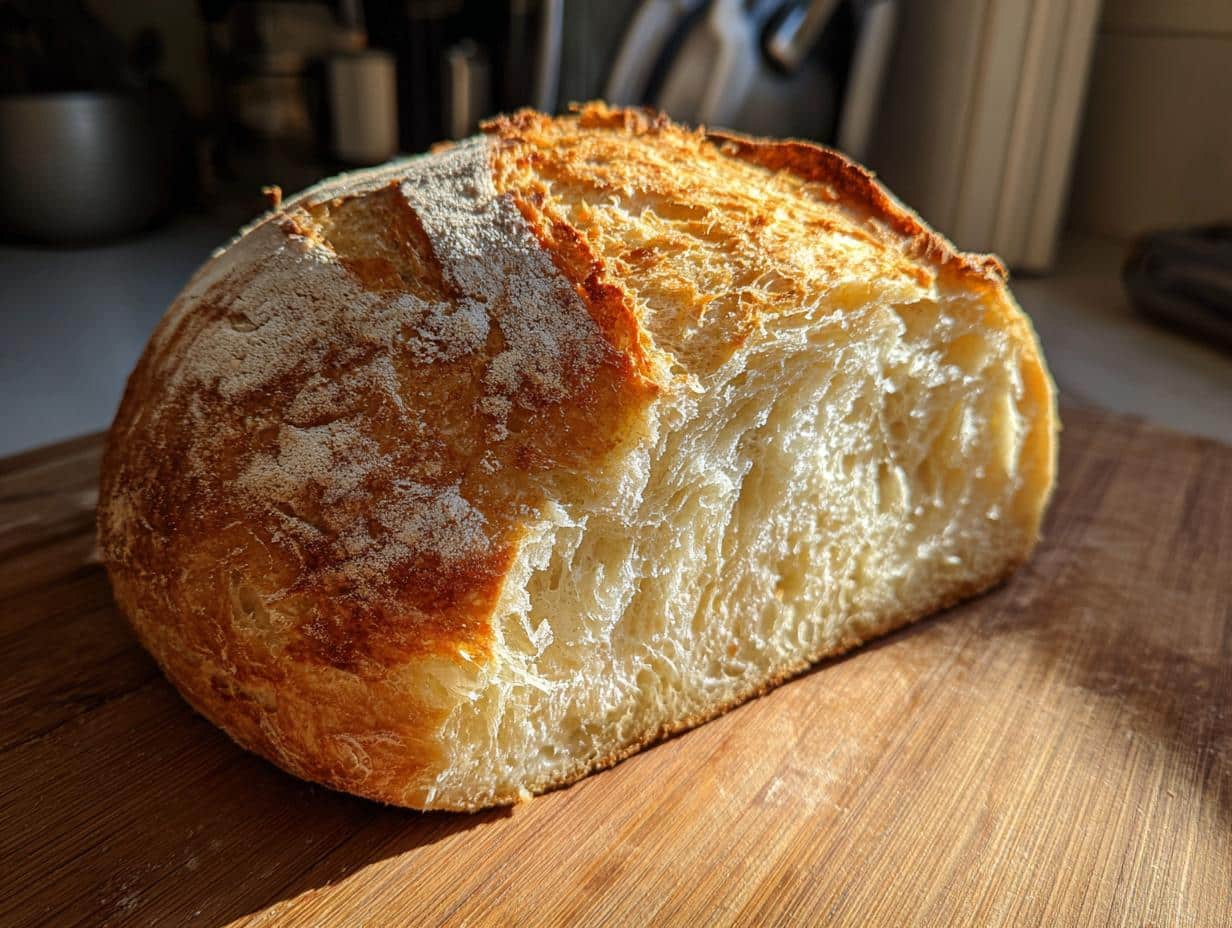
Pain de Campagne

Pain de Campagne

4.8 from 753 votes

A rustic French country bread with a crisp, dark crust and a chewy, open crumb. This slow-fermented loaf uses a combination of white and whole wheat flours for a complex, nutty flavor.

Prep Time20 mins
Cook Time40 mins
Resting Time0 mins
Total Time14 hours 30 mins
Servings: 1 large loaf (12 slices)Cuisine: InternationalCalories: 180 kcal per slice

🥘Ingredients

For the Levain (Starter)

50g active sourdough starter
100g bread flour
100g water at room temperature

For the Dough

400g bread flour
100g whole wheat flour
350g water at 80°F (27°C)
12g fine sea salt
All of the levain (about 250g)

👨‍🍳Directions

1Build the levain 8-12 hours before mixing the dough.
2Combine 50g active sourdough starter with 100g bread flour and 100g water in a jar.
3Stir well, cover loosely, and let ferment at room temperature (70-75°F) until doubled in volume and bubbly on top.
4Mix the dough by combining 400g bread flour, 100g whole wheat flour, and 350g water at 80°F in a large bowl.
5Use your hand to mix until no dry flour remains, then let rest (autolyse) for 30 minutes covered with plastic wrap.
6Add all of the levain (about 250g) and 12g fine sea salt on top of the dough.
7Wet your hand and squeeze the ingredients together, then fold the dough over itself several times until the salt and levain are fully incorporated.
8The dough should feel smooth and slightly sticky.
9Perform 4 sets of stretch and folds at 30-minute intervals over the next 2 hours.
10To do this, wet your hand, grab one side of the dough, stretch it upward, and fold it over the center.
11Rotate the bowl 90 degrees and repeat for all four sides.
12Cover the bowl with plastic wrap between sets.
13After the final fold, cover the bowl tightly with plastic wrap and let the dough bulk ferment at room temperature (70-75°F) for 4-6 hours, or until it has increased in volume by about 50% and shows small bubbles on the surface.
14The dough should feel airy and jiggly when gently shaken.
15Turn the dough out onto a lightly floured surface.
16Gently shape it into a round by folding the edges toward the center, then flip it seam-side down and use your hands to rotate and tighten the ball against the counter.
17Place the dough seam-side up into a floured banneton.
18Cover the banneton with plastic wrap or a damp towel and refrigerate for 8-12 hours for the final proof.
19The dough should feel puffy and hold a gentle indentation when poked with a finger.
20If it springs back quickly, let it proof at room temperature for another 1-2 hours.
21Place a Dutch oven with its lid on the middle rack of the oven and preheat to 500°F for at least 30 minutes.
22Carefully remove the hot Dutch oven, place a sheet of parchment paper over the banneton, and invert the dough onto the parchment.
23Score the top with a sharp lame in a single deep slash about 1/2 inch deep.
24Use the parchment to lower the dough into the Dutch oven, put the lid on, and bake at 500°F for 20 minutes.
25Remove the lid, reduce the oven temperature to 450°F, and continue baking for another 20-25 minutes until the crust is deep golden brown and the internal temperature reaches 205-210°F.
26The loaf should sound hollow when tapped on the bottom.
27Transfer the bread to a cooling rack and let cool completely for at least 2 hours before slicing.
28This allows the crumb structure to set properly.
29Store the bread in a paper bag at room temperature for up to 3 days, or slice and freeze for longer storage.

🔧Equipment

Digital kitchen scale
Large mixing bowl
Dough scraper
Plastic wrap or damp kitchen towel
Banneton or proofing basket lined with a floured cloth
Dutch oven (5-6 quart) with lid
Parchment paper
Sharp lame or razor blade for scoring
Cooling rack

📊Nutrition Facts (per serving)

🔥Calories: 180 kcal🧈Total Fat: 0.5g💛Saturated Fat: 0.1g❤️Cholesterol: 0mg🧂Sodium: 390mg🌾Total Carbs: 37g🥦Dietary Fiber: 2g🍬Sugars: 0.5g🥩Protein: 6g

📝Notes

For best results, use a digital scale for precise measurements. The dough is very wet and sticky; resist adding extra flour during shaping. If you do not have a Dutch oven, bake the bread on a preheated baking stone with a steam pan at the bottom of the oven. The levain is ready when it is bubbly, doubled, and smells pleasantly sour.

Watch Video Of How Pain de Campagne Works

I always recommend making extra batches of pain de campagne because it freezes well and can be reheated in the oven when needed.

It’s also great served toasted with butter or cheese for an easy snack or meal.

My kids love it when we have pain de campagne sandwiches at school lunches or picnics – they’re easy to pack and provide sustenance without being too messy.

❓ Frequently Asked Questions About Pain de Campagne

Q: What is pain de campagne?

Pain de campagne is a type of French bread that is made with whole wheat flour and uses a natural starter culture instead of commercial yeast.

Q: What are the ingredients in pain de campagne?

The ingredients in pain de campagne are simple: whole wheat flour, water, salt, and natural starter culture.

Q: How do you make pain de campagne?

To make pain de campagne, you’ll need to create a natural starter culture by mixing together equal parts of flour and water and letting it sit for 24 hours before adding the remaining ingredients.

Q: Can you use commercial yeast instead of natural starter culture?

No, using commercial yeast will not produce the same flavor and texture as using a natural starter culture.

Q: Can you make pain de campagne ahead of time?

Yes, you can make pain de campagne ahead of time by letting it rise for longer periods of time before baking.

Similar Posts