traditional herb stuffing recipe


The Best traditional herb stuffing recipe
I’ve been making traditional herb stuffing for as long as I can remember, and it’s always a crowd-pleaser. The moment I start preparing the ingredients, my family knows that we’re in for a treat.
This recipe has been passed down through generations, and its simplicity is what makes it so endearing to me. The combination of fresh herbs like parsley, sage, and thyme, along with the subtle sweetness of onions and celery, creates a flavor profile that’s both comforting and elegant.
It’s a dish that never fails to bring us together during the holidays or any special occasion. My kids love helping me mix the ingredients together, and they always ask for seconds (or thirds!)
I’ve experimented with various recipes over the years, but this one remains my go-to because of its versatility and adaptability to any occasion. Whether it’s a casual dinner or an elaborate holiday feast, this stuffing always brings a smile to everyone’s face.
Its health benefits are also worth mentioning – the abundance of herbs provides a boost to our immune system, while the vegetables add fiber and nutrients. When cooked with love and care, this dish is sure to become a staple in your household just like it has in mine.
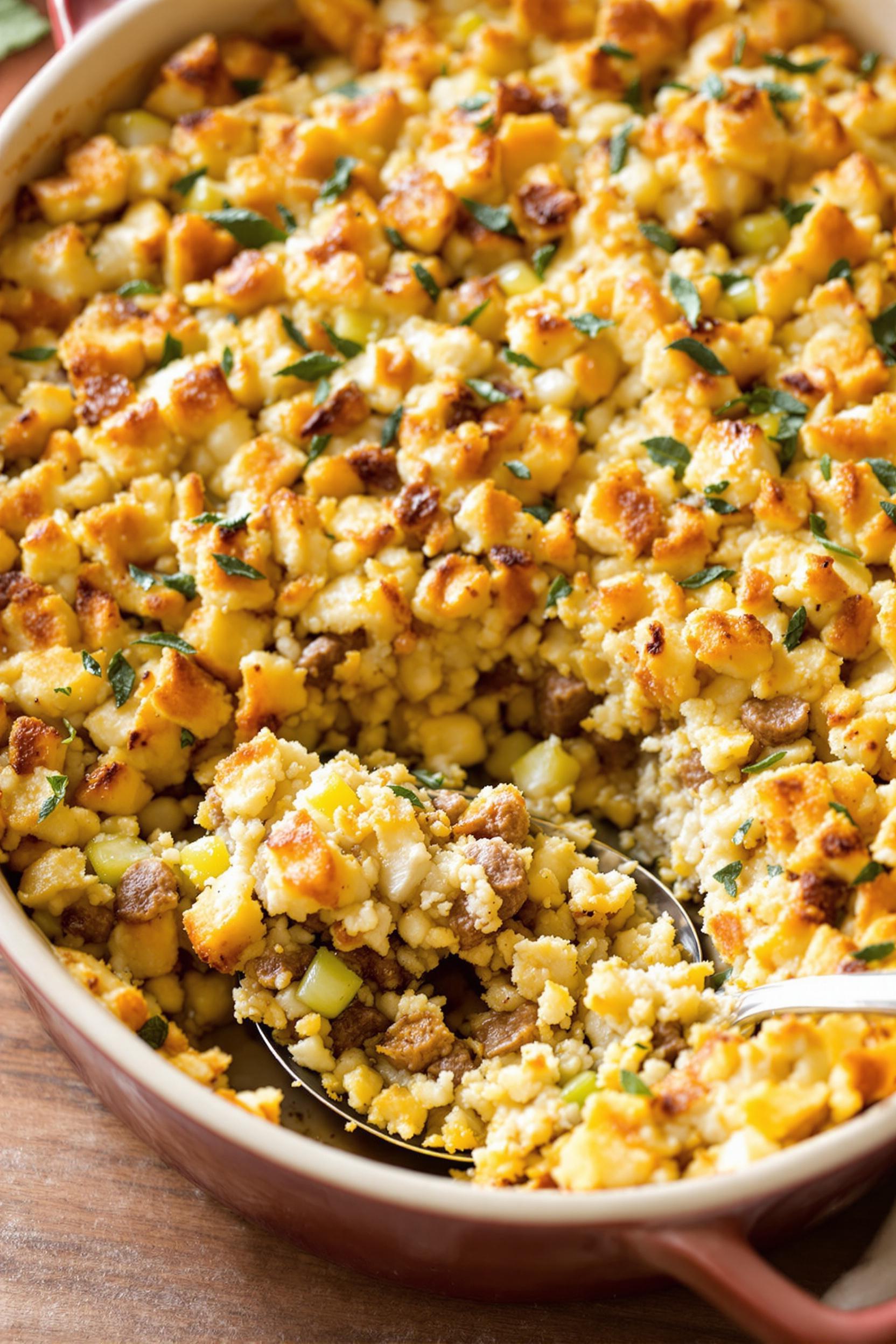
Traditional Herb Stuffing
A classic herb stuffing made with crusty bread, aromatic vegetables, and a blend of fresh herbs. This dish is baked until golden and crisp on top while remaining moist and flavorful inside.
🥘Ingredients
For the Stuffing
👨🍳Directions
🔧Equipment
📊Nutrition Facts (per serving)
📝Notes
Watch Video Of How Traditional Herb Stuffing Works
This traditional herb stuffing recipe is always a good idea for any occasion because it brings people together with its familiar, comforting taste. It works perfectly for family gatherings, whether it is a holiday feast or a simple Sunday dinner, and everyone always asks for seconds.
I love that I can make it ahead and just pop it in the oven when I am ready, which takes so much stress out of hosting. For storing leftovers, let the stuffing cool completely, then transfer it to an airtight container and keep it in the fridge for up to four days.
To reheat, I put it in a baking dish with a splash of chicken broth, cover it with foil, and warm it in a 350 degree oven for about 15 minutes. You can also reheat individual portions in the microwave, but the oven keeps the texture better.
For serving ideas, this stuffing pairs beautifully with roasted turkey, chicken, or pork, and I sometimes spoon it alongside a simple green salad for a lighter meal. It also freezes well for up to three months, so I often double the batch and save one for later.
❓ Frequently Asked Questions About Herb Stuffing
1. Can I use dried herbs instead of fresh in this stuffing recipe?
Yes, you can substitute dried herbs, but the flavor will be less vibrant. Use about one third of the amount called for fresh, since dried herbs are more concentrated. I recommend adding a little extra sage and thyme to compensate.
2. What type of bread works best for traditional herb stuffing?
A sturdy, crusty bread like French bread or sourdough works best because it holds its shape and absorbs liquid well. Avoid soft sandwich bread, which can turn mushy. Stale bread that is a day or two old is ideal.
3. Can I make this stuffing ahead of time and bake it later?
Absolutely. Assemble the stuffing in the baking dish, cover it tightly with foil, and refrigerate for up to 24 hours. When ready to bake, add about 10 to 15 extra minutes to the cooking time since it will be cold.
4. Is it necessary to add eggs to the stuffing?
Eggs help bind the stuffing together and give it a slightly custard-like texture. If you need an egg free version, you can omit them, but the stuffing will be more crumbly. Adding a little extra broth can help keep it moist.
5. How do I keep my stuffing from drying out in the oven?
Cover the dish with foil for the first 30 minutes of baking to trap steam and moisture. Remove the foil for the last 10 to 15 minutes to let the top get golden and crisp. Also, be careful not to overbake it.
6. Can I add meat or other ingredients to this stuffing?
Yes, you can mix in cooked sausage, bacon, or mushrooms for extra flavor. Just make sure any meat is fully cooked before adding it to the bread mixture. You may need to adjust the salt and broth amounts accordingly.