jewish rye bread recipe


The Best jewish rye bread recipe
I’ve been making Jewish rye bread for years, and it’s a recipe that never fails to impress my family and friends. The first time I made it, I was struck by the complexity of flavors and textures that come together in this traditional bread.
The slightly sweet and earthy taste of the rye flour, combined with the tang of caraway seeds and the subtle hint of salt, creates a flavor profile that’s both familiar and exotic. But what really sets this bread apart is the technique involved in making it – the slow rise, the careful mixing, and the gentle shaping all come together to create a loaf that’s both dense and tender.
As a busy mom, I appreciate how easy it is to make this bread on a weeknight, but I also love how special it feels to serve it at a holiday dinner or family gathering. My kids adore helping me mix the dough, and they always get excited when they get to shape the loaves into their favorite shapes.
We’ve had our fair share of delicious meals thanks to this recipe, from sandwiches to toast to French toast – but I think my favorite way to enjoy it is simply sliced and served on its own, with a pat of butter and a sprinkle of salt. There’s something comforting about taking a bite of warm Jewish rye bread that’s hard to put into words – but trust me when I say it’s an experience you won’t want to miss out on.
Over time, I’ve tweaked the recipe to suit our tastes, adding in extra caraway seeds for an extra kick of flavor or swapping out some of the all-purpose flour for whole wheat for a nuttier taste. But no matter what changes I make, the core essence of this bread remains the same – hearty, comforting, and perfect for any occasion.
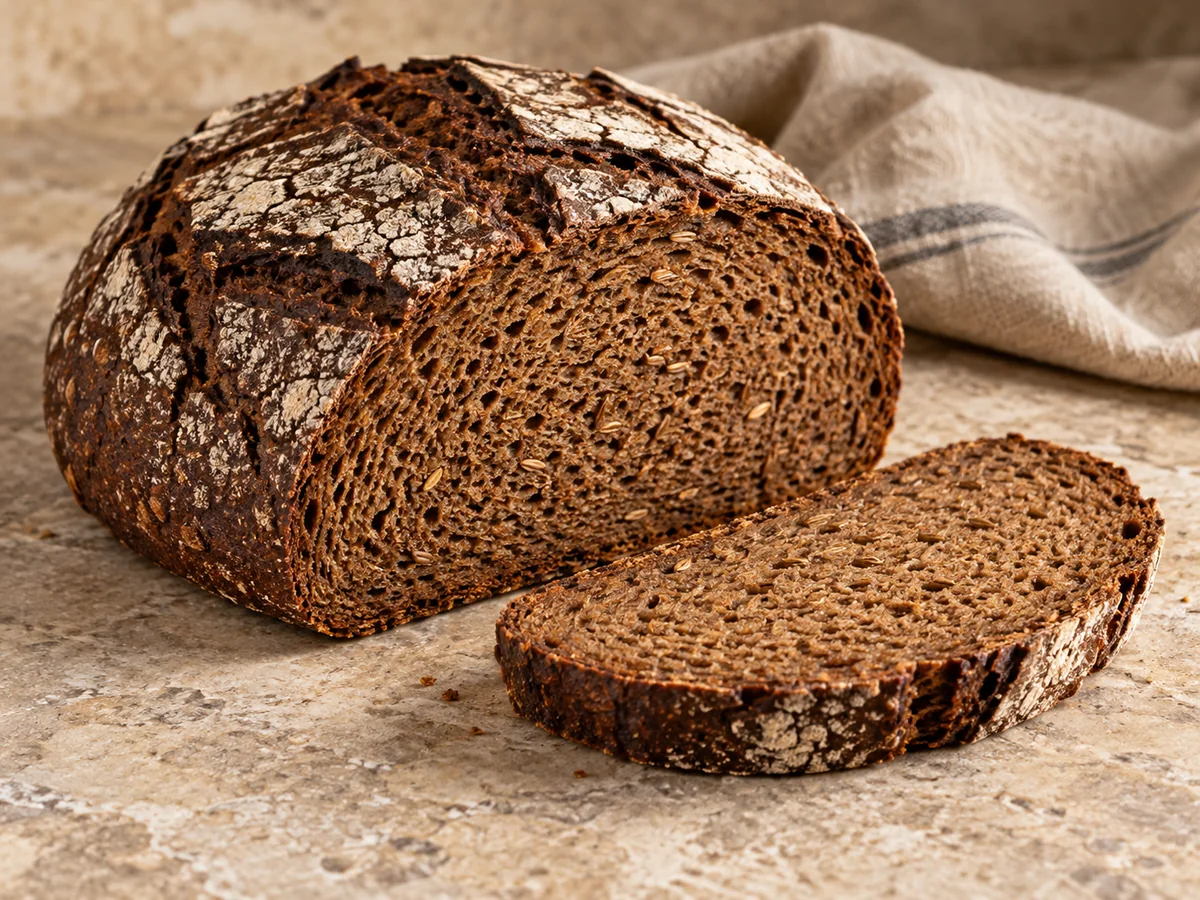
Jewish Rye Bread
A classic Jewish rye bread with a dense crumb and a tangy flavor from caraway seeds. This recipe yields a hearty loaf perfect for sandwiches or toasting.
🥘Ingredients
For the Sponge
For the Dough
For the Wash
👨🍳Directions
🔧Equipment
📊Nutrition Facts (per serving)
📝Notes
Watch Video Of How Jewish Rye Bread Works
This recipe has been a staple in our household for years, and we can’t get enough of its rich flavor and comforting texture. Whether you’re serving it as part of a full meal or just enjoying slices on their own, Jewish rye bread is sure to be a hit with your family.
And as an added bonus? It freezes beautifully so you can enjoy fresh-baked loaves whenever you want.
With its versatility in serving styles – whether as sandwiches or toast or even as croutons in salads – this recipe is sure to become one of your go-tos.
❓ Frequently Asked Questions About Jewish Rye Bread
Q: What type of flour should I use for Jewish rye bread?
For an authentic flavor and texture, you’ll want to use a high-quality rye flour that’s specifically labeled as ‘rye’ or ‘pumpernickel.’ Some grocery stores may also carry ‘dark rye’ or ‘light rye’ flours – these will also work well in this recipe.
Q: Can I substitute other types of seeds for caraway seeds?
While caraway seeds are traditional in Jewish rye bread, you can experiment with other types of seeds like sesame or poppy seeds if you prefer.
Q: How do I store leftover Jewish rye bread?
You can store leftover Jewish rye bread at room temperature for up to 2 days or wrap it tightly in plastic wrap and freeze for up to 2 months.
Q: Can I make Jewish rye bread in a stand mixer?
While it’s technically possible to mix the dough in a stand mixer, we recommend using a wooden spoon or your hands instead for better control over the ingredients.
Q: What’s the best way to shape Jewish rye bread?
The traditional shape for Jewish rye bread is a round loaf – simply shape your dough into a ball and then flatten it slightly into a disk shape before placing it onto your baking sheet.